Social Media Management Services vs. Growth Systems: What Small Businesses Actually Need
Social media management services can create awareness, but posting alone rarely builds a growth engine. The better question is how social content connects to offers, lead capture, CRM follow-up, and measurable revenue signals.
The 60-second answer
- Social media management is useful when it supports positioning, trust, distribution, and retargeting — not when it exists as a disconnected posting calendar.
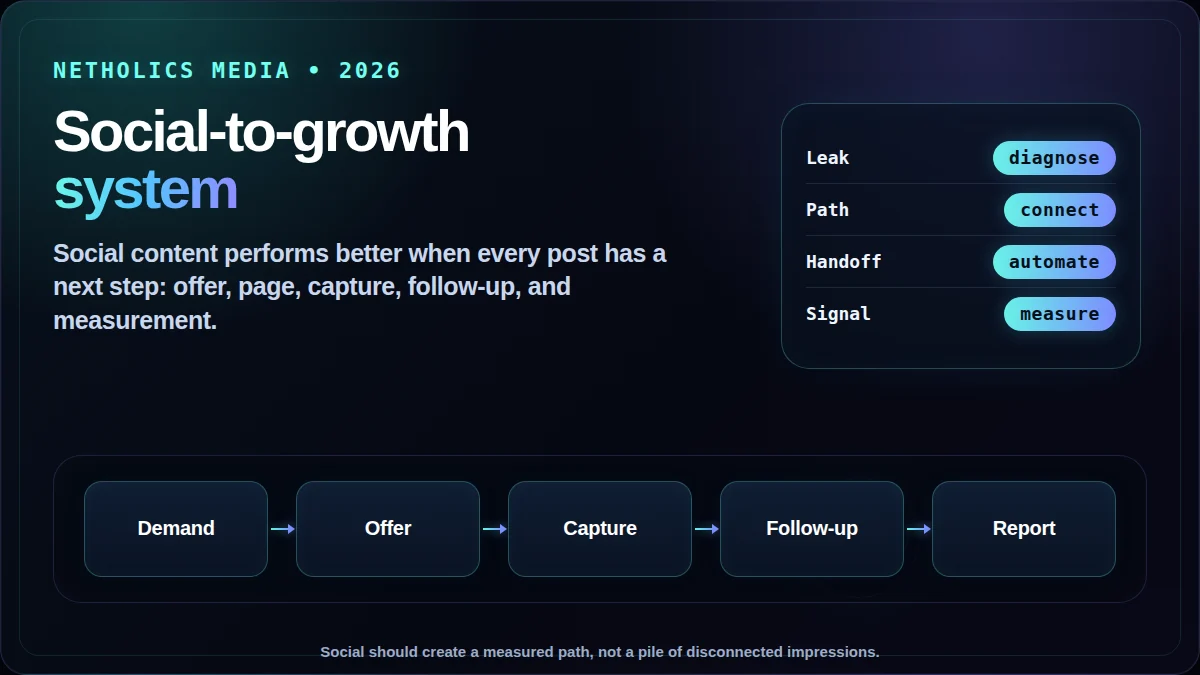
- A growth system connects social content to offers, landing pages, lead capture, CRM, follow-up, and reporting.
- The biggest hidden cost of “posting packages” is that they often measure activity instead of business movement.
- AI can help repurpose and QA content, but it should not replace brand judgment or customer context.
- Buy social management when the strategy is clear; build the system first when the next step after attention is weak.
The difference between posting and building a growth system
Social media management services usually promise planning, posting, creative production, captions, comments, and reporting. Those activities can matter, but they do not automatically produce leads or revenue.
A digital growth system asks what happens after the audience sees the content. Is there a clear offer? Does the profile point to a useful landing page? Does the visitor enter a CRM? Is follow-up timely? Can the business see which content themes produced real conversations?
The answer is not to stop using social. The answer is to stop treating social as the whole plan. Social should feed the system, not substitute for it.
When social media management services are worth buying
Social management is valuable when the business already has clear positioning, a defined offer, and a reliable next step. In that environment, consistent content can build familiarity, answer objections, show proof, and keep the brand present while other channels create demand.
It is weaker when the business has no landing pages, no lead capture, no CRM, no follow-up workflow, and no meaningful reporting. In that case, more posts may create impressions but still fail to produce a measurable pipeline.
What a growth system adds around social
A growth system gives social content somewhere to send people and something useful to measure. That could be a service page, audit offer, comparison guide, newsletter, booking flow, or retargeting audience. The point is to turn attention into a next step.
The stack does not need to be complex. A small business can begin with one strong offer page, one social content pillar, one lead form, one CRM pipeline, and one follow-up workflow.
The metrics that separate activity from progress
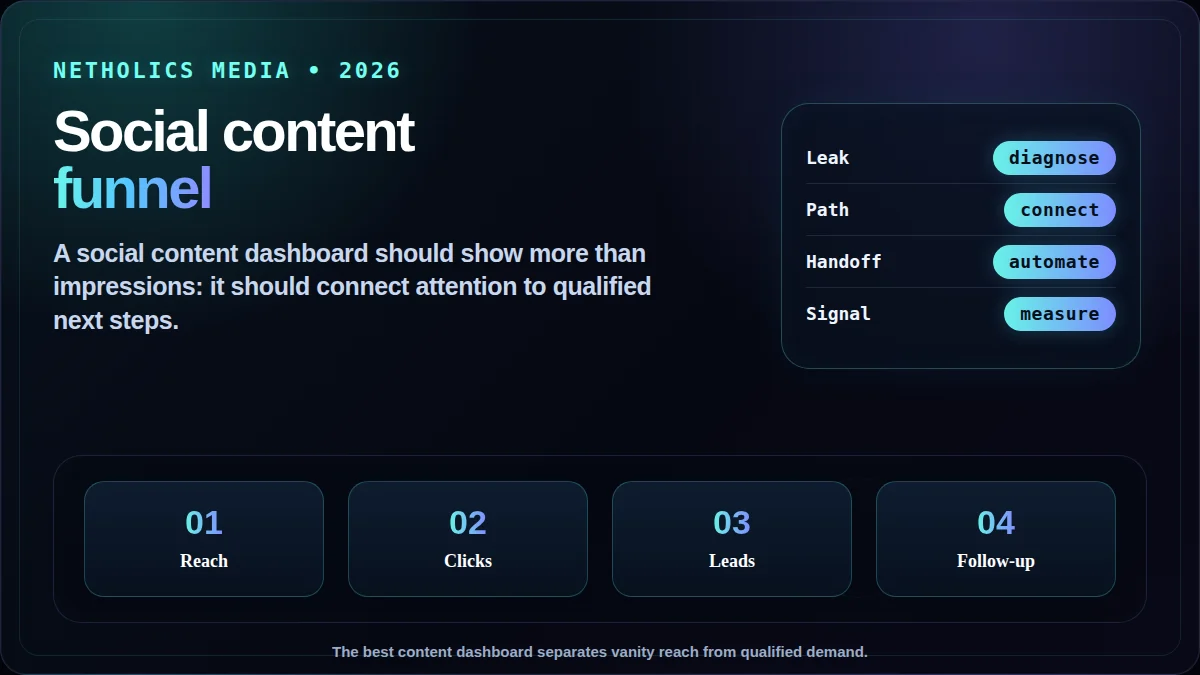
Follower count and posting frequency are not enough. Better signals include profile-to-page clicks, landing page conversion, direct messages that become qualified opportunities, booked calls, assisted conversions, and repeatable content themes that create sales conversations.
A provider should report both platform activity and business movement. If the report cannot connect content to a next step, it is a content production report, not a growth report.
How to decide what to buy first
If your content is inconsistent but your funnel is solid, buy social management. If your audience engages but nobody converts, fix the landing page and offer. If leads arrive but go cold, fix CRM routing and follow-up. If nobody knows what worked, fix analytics.
Netholics usually sequences social inside a broader operating stack: content pillars, conversion paths, lead capture, automated handoffs, and a dashboard that shows which themes deserve more investment.
The practical operating map
| Option | Best for | Risk if isolated |
|---|---|---|
| Posting calendar | Consistency and brand presence | Activity without lead capture |
| Community management | Trust and response speed | No attribution to pipeline |
| Paid social | Testing offers and retargeting | Spend hides funnel leaks |
| Growth system | Connected attention-to-lead path | Requires upfront diagnosis |
| CRM follow-up | Preventing social leads from going cold | Weak if source context is missing |
A worked example
A home-services company gets good engagement on before-and-after posts, but the profile sends users to a generic homepage. The better first fix is a service-specific landing page, a quote request flow, source tagging, and a follow-up reminder before increasing posting volume.
diagnose: biggest_leak
connect: page -> lead_capture -> CRM -> follow_up
measure: source, conversion, speed_to_lead
review: weekly bottleneck, monthly roadmapWhat other experts say
Meta Business Help Meta’s business guidance points advertisers toward goals, audiences, creative, and measurement. That supports treating social as one part of a measurable funnel rather than an isolated content habit.
Google Analytics Help Analytics conversion events help connect off-platform attention to actions on the website, which is where most social programs become measurable.
Implementation checklist
- Define the offer each content pillar should support.
- Point social profiles and campaign posts to a specific page, audit, guide, or booking action.
- Track profile clicks, landing-page conversions, direct-message outcomes, and assisted leads.
- Create a response workflow for qualified comments, DMs, and lead form submissions.
- Repurpose content with AI, but keep voice, claims, and replies under human approval.
- Use monthly reporting to decide which content themes deserve more distribution.
Automation readiness / decision card
- High impact: define the offer each content pillar should support.
- Medium risk: AI-assisted production, routing, summaries, and recommendations with review gates.
- High risk: fully automated public claims, customer replies, or spend decisions without human context.
- Best first workflow: track profile clicks, landing-page conversions, direct-message outcomes, and assisted leads.
- Do not automate yet: any step the team cannot measure, explain, or manually approve.
Frequently asked questions
Q: Are social media management services worth it for small businesses?
They can be worth it when the business has a clear offer, conversion path, and follow-up process. If those pieces are missing, posting may create activity without producing measurable growth.
Q: What is the difference between social media management and a growth system?
Social media management focuses on publishing, engagement, and platform presence. A growth system connects that attention to landing pages, lead capture, CRM, follow-up, and reporting.
Q: What should social media management include?
Useful social management includes content pillars, creative production, publishing, engagement, campaign support, reporting, and coordination with offers or landing pages. It should not be disconnected from the rest of marketing.
Q: Which metrics matter most for social media?
Track platform engagement, but also profile clicks, landing page conversion, qualified messages, booked calls, assisted leads, and content themes that create sales conversations.
Q: Can AI manage social media for a business?
AI can draft, repurpose, summarize, and QA content, but humans should approve brand voice, claims, offers, and sensitive replies. Social content still needs judgment and context.
Q: How does Netholics improve social media results?
Netholics connects social content to the offer, page, CRM, follow-up workflow, and dashboard so content becomes part of a measurable growth system.
Further reading / sources
Make social content part of a measurable funnel.
Netholics turns social visibility into connected offers, lead capture, follow-up workflows, and reporting that shows what content actually moves.